
Cyber Insurance: Essential Protection for SMBs
By Joaquin Hernandez, President & CEO, Empowered IT Solutions
For small and medium-sized businesses (SMBs) in San Diego, a single click can cause an entire enterprise to crumble. Out in the networking world, business owners frequently share scary stories about data breaches. Yet, a critical piece of the security puzzle remains dangerously overlooked: cyber incident insurance and the reality of business liability.
Many owners operate under the assumption that general liability insurance covers digital disasters, or that cyber insurance is a safety net requiring nothing more than a monthly premium. The reality is far more complex. Understanding how cyber insurance intersects with your company’s liability is essential to protecting what you have worked so hard to build.
The Shift in Business Liability
Historically, a cyberattack was viewed as a stroke of bad luck. Today, regulatory bodies, clients, and partners view a breach as a potential failure of due diligence. If an email compromise or a ransomware attack shuts down your systems or leaks sensitive client data, your business can be held legally and financially liable for the fallout.
This liability deepens significantly if your business operates in a regulated industry. For instance, San Diego healthcare organizations must adhere strictly to HIPAA, while financial and tax professionals face mandatory compliance with the IRS Written Information Security Plan (WISP). Failing to meet these compliance frameworks doesn’t just invite regulatory penalties—it amplifies your legal liability in the event of a breach.
The Cyber Insurance Catch-22
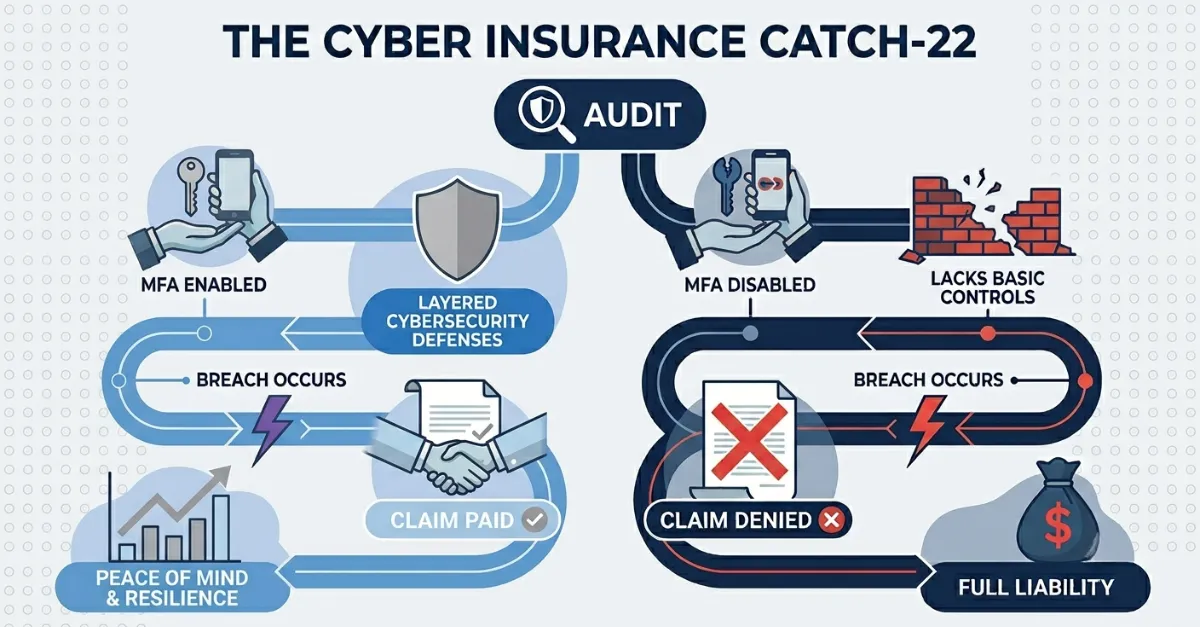
To mitigate this financial risk, many organizations turn to cyber incident insurance. However, the cyber insurance landscape has dramatically shifted. Insurance providers are no longer writing blank checks. Because ransomware attacks and data breaches have skyrocketed, underwriters have become incredibly strict.
You cannot simply buy a policy and look the other way. Today, cyber insurance policies act as a contract of shared responsibility. To qualify for a policy, and more importantly, to ensure a claim is actually paid out after an incident, your business must prove that it maintains a baseline of proactive cybersecurity defenses.
If an insurance provider discovers that a breach occurred because your team lacked basic protections, such as multi-factor authentication (MFA) or updated firewall protocols, they can deny your claim entirely. In that scenario, the entire financial burden of data restoration, legal fees, and client notification falls squarely on your business.
How to Ensure You Are Insurable and Protected
Navigating the intersection of cyber insurance, compliance, and operational security can feel overwhelming. Most business owners want simplicity—technology and security that just work so they can achieve peace of mind.
To limit your liability and satisfy strict insurance underwriters, your strategy should focus on these foundational areas:
Implement Layered Cybersecurity: Ensure every device and email system is fully secured against phishing and unauthorized access.
Enforce Proactive Ransomware Defenses: Deploy continuous monitoring tools that catch threats before they turn into full-blown business disruptions.
Align with Industry Compliance: Whether it is HIPAA, NIST, or IRS WISP, matching your security controls to your industry’s specific legal requirements is non-negotiable.
Maintain Incident Response and Recovery Plans: Having a clear, tested roadmap for data recovery allows you to contain an attack quickly and minimize the downtime that triggers massive liability claims.
The Human Component of Security
Ultimately, cybersecurity is about relationships, trust, and human connection. Technology should work for you, not against you. By treating cyber insurance not just as an administrative box to check, but as an extension of your broader risk-management and compliance strategy, you ensure that your San Diego business remains resilient, compliant, and fully protected against whatever comes next.
Frequently Asked Questions (FAQs)
Can my cyber insurance claim be denied if my business is hacked?
Yes. Cyber insurance is a contract of shared responsibility. If an underwriter discovers that a breach occurred because your business lacked basic security protocols promised in your application, such as multi-factor authentication (MFA) or updated firewalls, they have the legal right to deny your claim entirely.
Does my general business liability insurance cover cyberattacks?
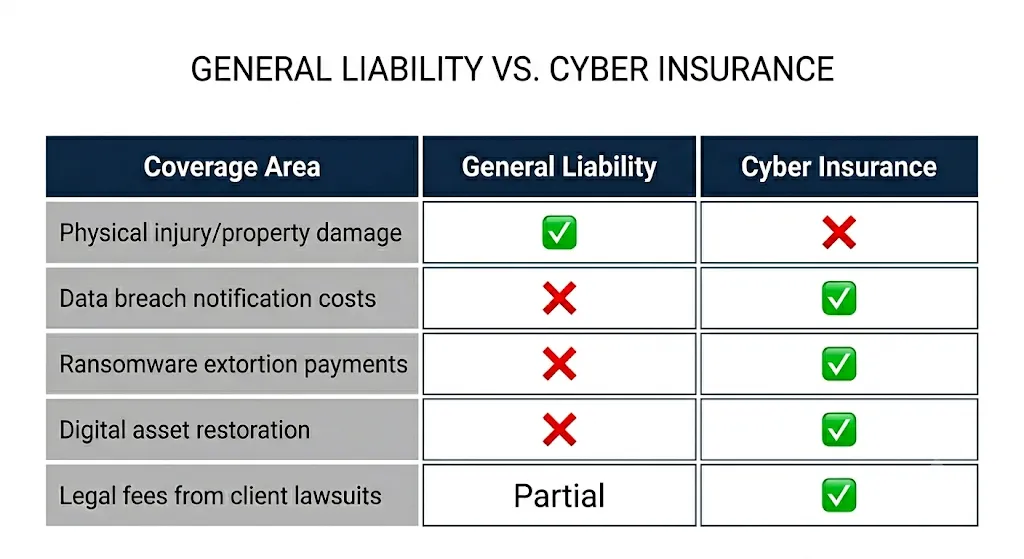
Typically, no. General liability policies are designed to cover physical injuries or property damage. They rarely cover digital asset restoration, ransomware extortion payments, or the legal notifications required after a data breach. A dedicated cyber incident insurance policy is required for digital protections.
What cybersecurity controls do insurance companies look for most?
Most modern insurance underwriters require a baseline of proactive defenses. This almost always includes Multi-Factor Authentication (MFA) on email accounts and endpoint protection on computers, automated patch management, employee cybersecurity awareness training, and a formalized data backup and recovery plan.
How does regulatory compliance affect my cyber liability?
If your San Diego business handles sensitive data (such as medical records under HIPAA or financial data under IRS WISP), failing to meet compliance frameworks significantly increases your legal liability. If a breach occurs and you are found non-compliant, you face severe regulatory fines in addition to potential lawsuits from affected clients.
Schedule your FREE regulatory compliance review today!
About the Author

Joaquin Hernandez is President and Founder of Empowered IT Solutions. With more than a decade of experience helping organizations navigate technology challenges, Joaquin specializes in IT strategy, cybersecurity risk management, compliance readiness, and business technology planning.
Since founding Empowered IT Solutions in 2015, he has helped businesses across industries—including legal, healthcare, accounting, manufacturing, and nonprofit organizations—implement practical technology solutions that improve security, productivity, and resilience. Joaquin regularly advises organizations on cybersecurity best practices, compliance frameworks, business continuity planning, and emerging technology trends.